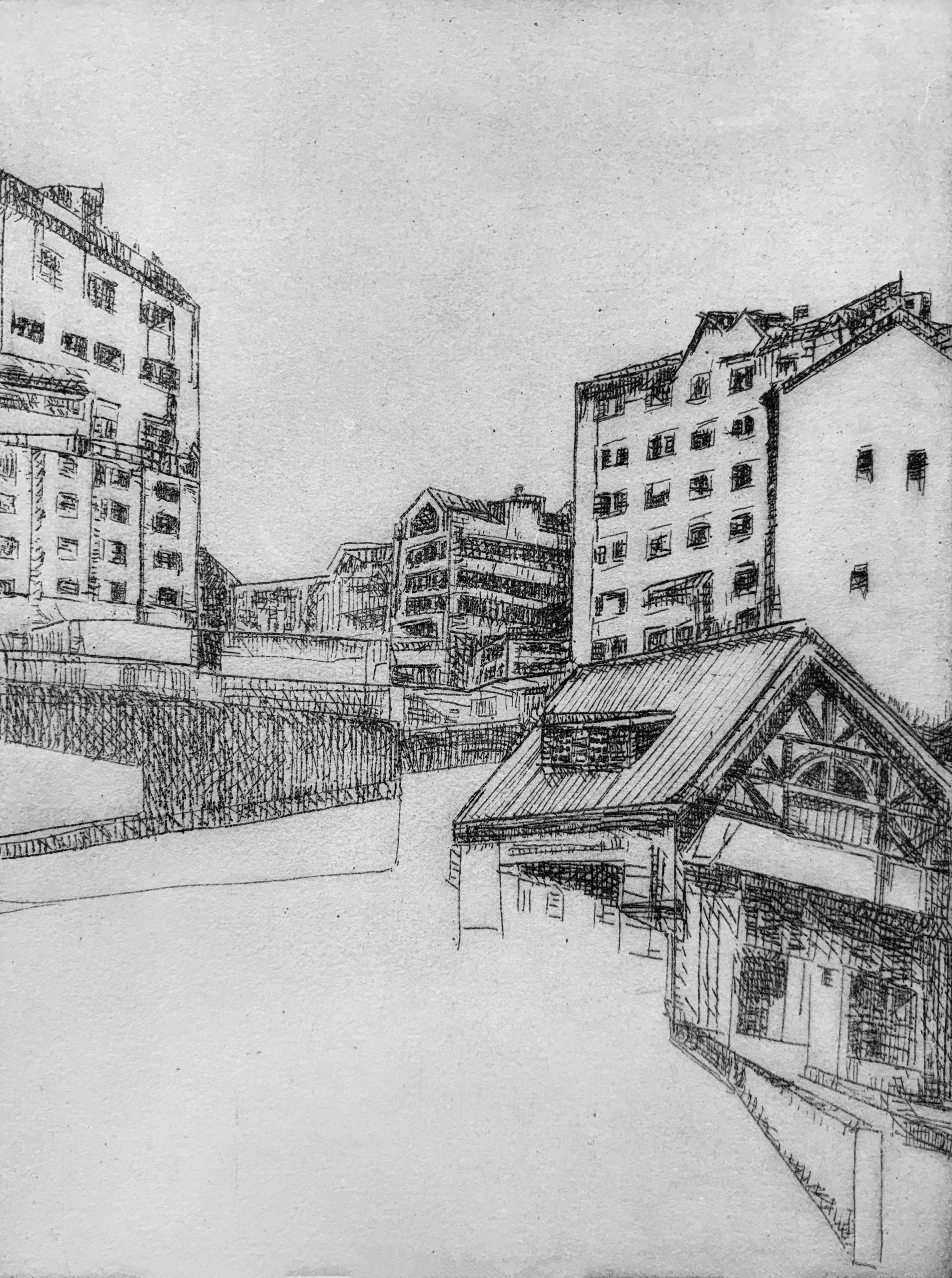
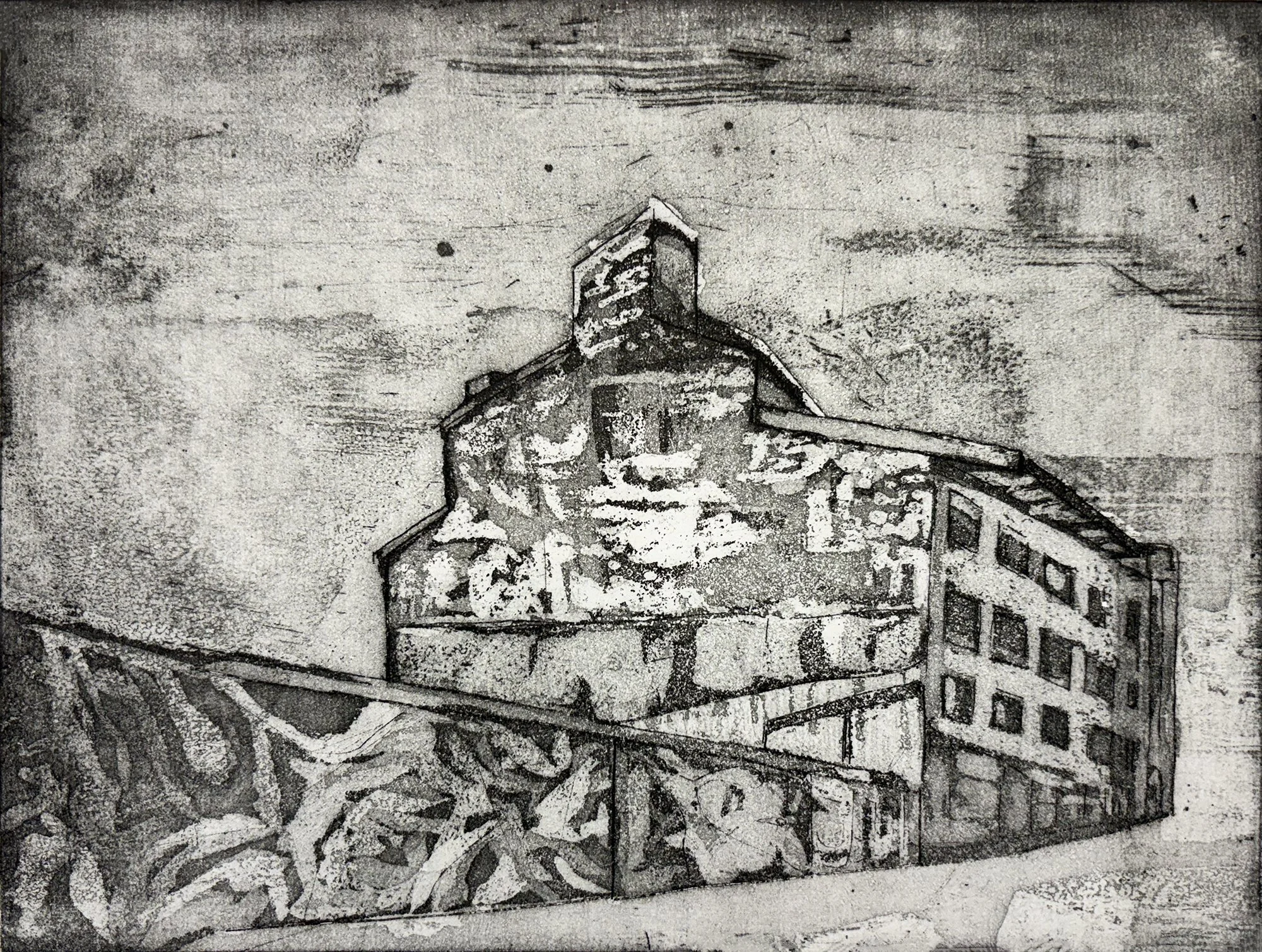
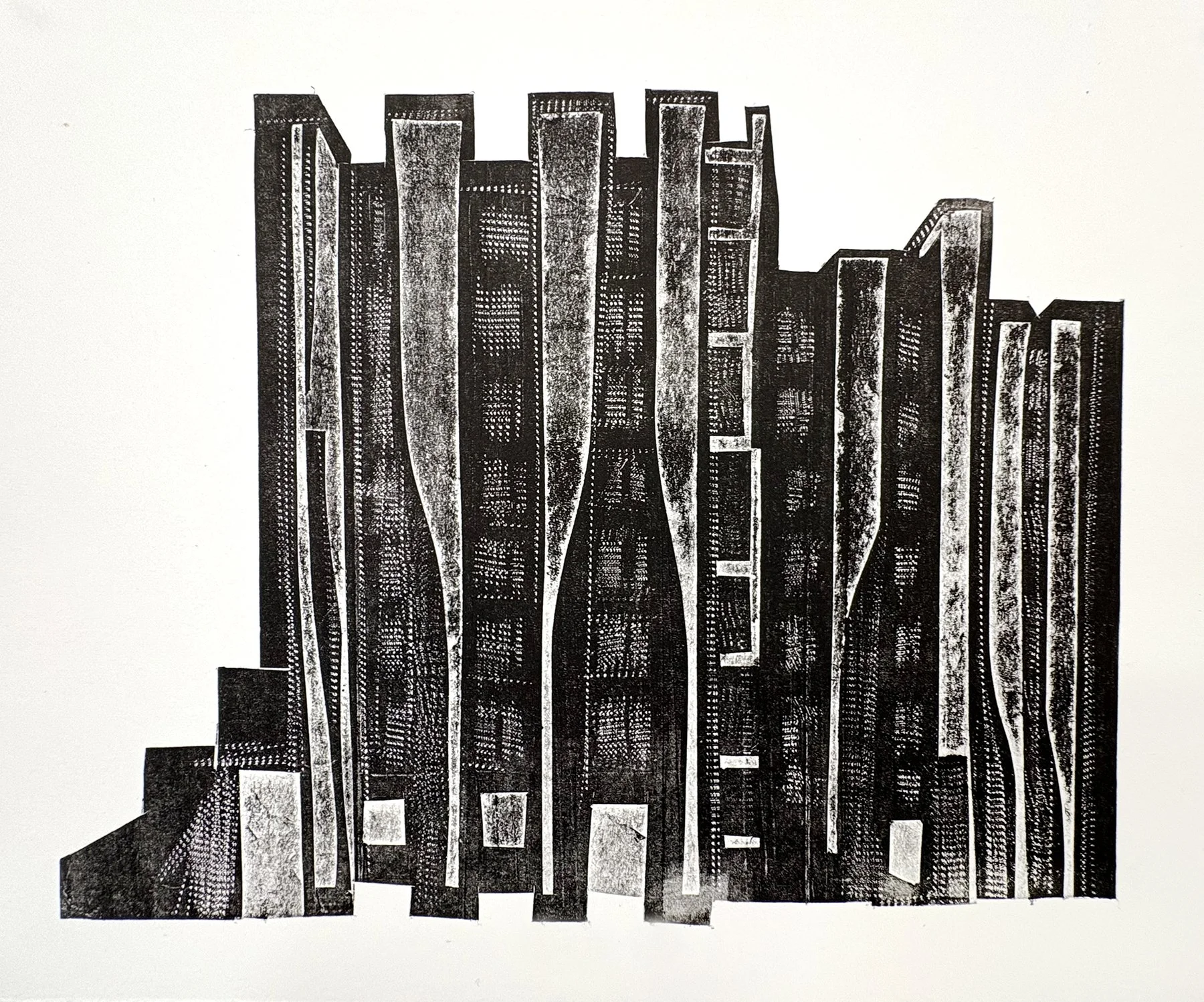
In March 2024, I participated in an artist residency and intensive workshop to adopt sustainable and non-toxic approaches in etching. This series explores a unique architecture in Bariloche, Argentina. This style of architecture, characterized by steep gables and wooden decoratively trimmed panels, was typically associated with German and Swiss Alpine buildings and was intentionally imported in the early 20th century to appeal to tourists to the Patagonia region.
Today, this architecture is falling out of favor in the region. This suite of prints examines one building in particular: the Bariloche post office, once a cultural landmark but slated for demolition. In this first print, I observe the post office and its vernacular architecture, and picture it starting to vanish and diminish in scale compared to the more Modern buildings surrounding it.
People tend to place greater value on losses than gains. We assign greater value to things we already possess... than to those we might be able to obtain.”
― Lily Bernheimer, The Shaping of Us: How Everyday Spaces Structure our Lives, Behavior, and Well-Being
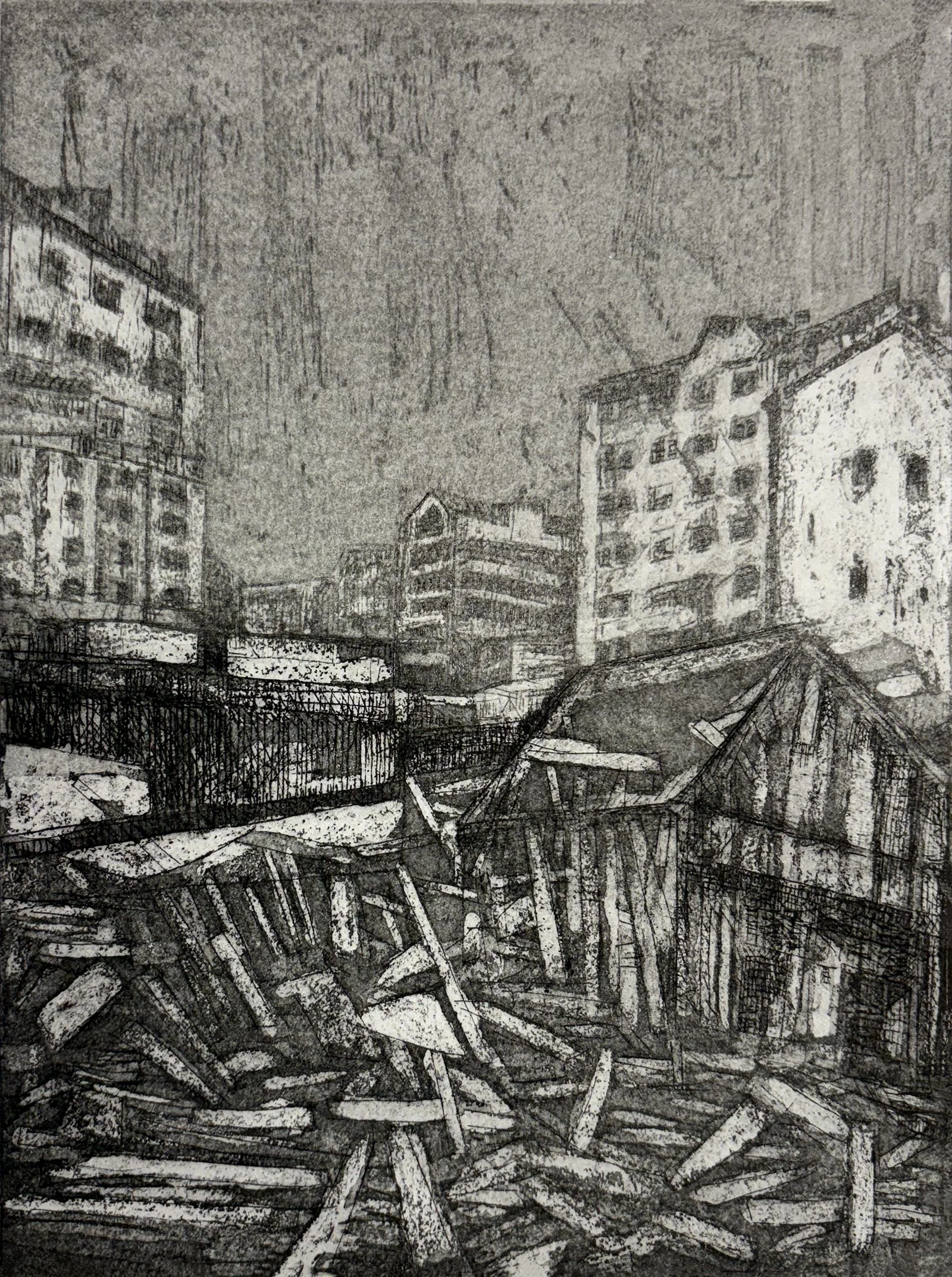
This post office, in ruin, is no longer a landmark for tourism or cultural vestiges; instead, it is preserved as an act of destruction not easily cleared to make room for another structure.
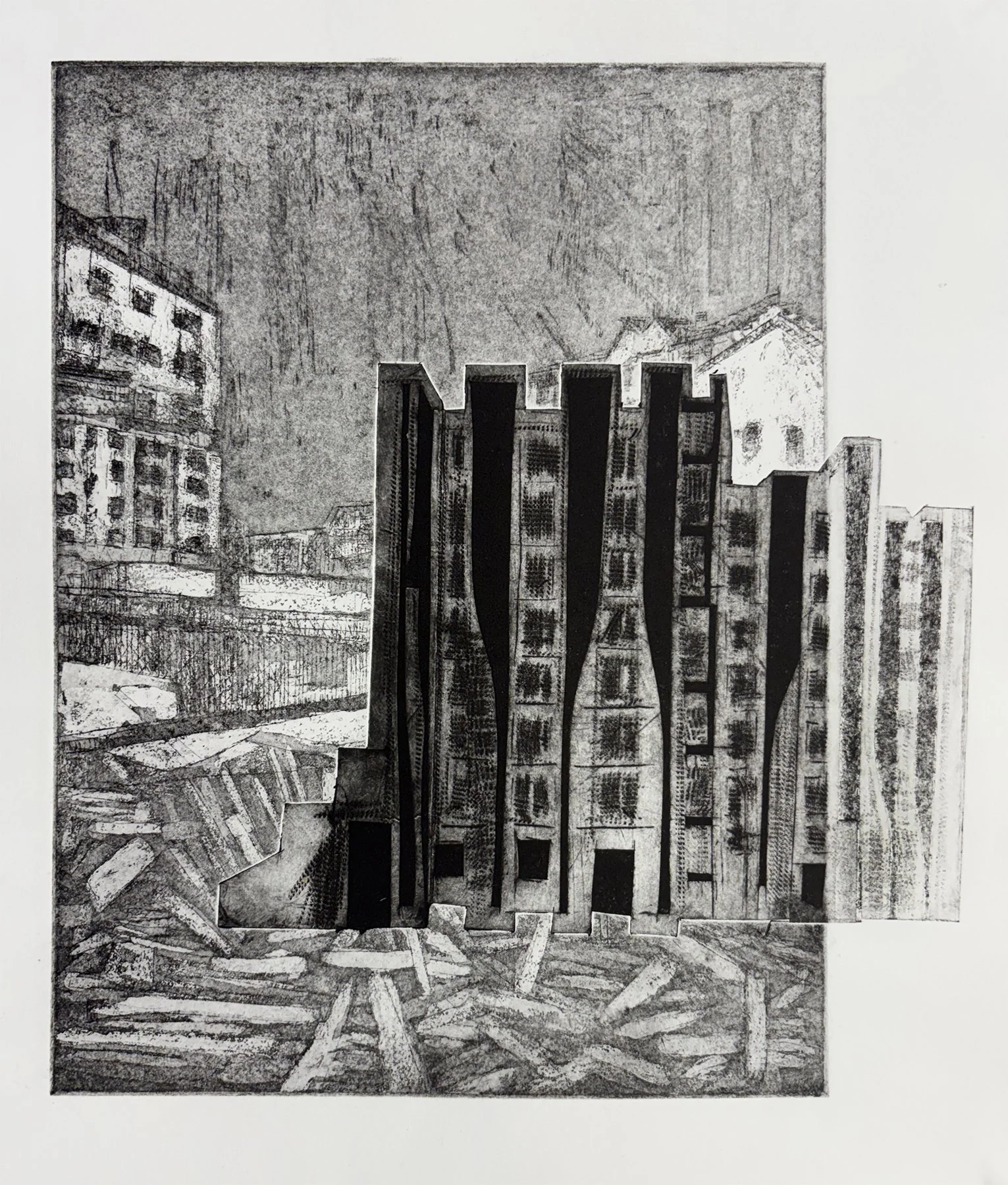
This print in the third state, in a suite of prints commemorating the Bariloche post office. Here, we can observe it in an intermediate state. It is partially demolished, and superimposed on top of it is the monolithic, more modern edifice that is slated to replace it: a Hilton hotel. This addition uses drypoint process on a Tetra Pak to convey the anticipation of the planned construction of a hotel. This is an example of sustainable printmaking, no new materials required for a matrix. Instead, a container that had previously been used for food storage can be upcycled, unfolded, and needled to make the image. It can also be shaped and cut, reminiscent of the shaped pieces typically found in my print media and paintings. Printed simultaneously with the zinc plate, holding the ghost of the former structure, the two surfaces become compressed to represent an ambiguity between past and future in one pictorial field.